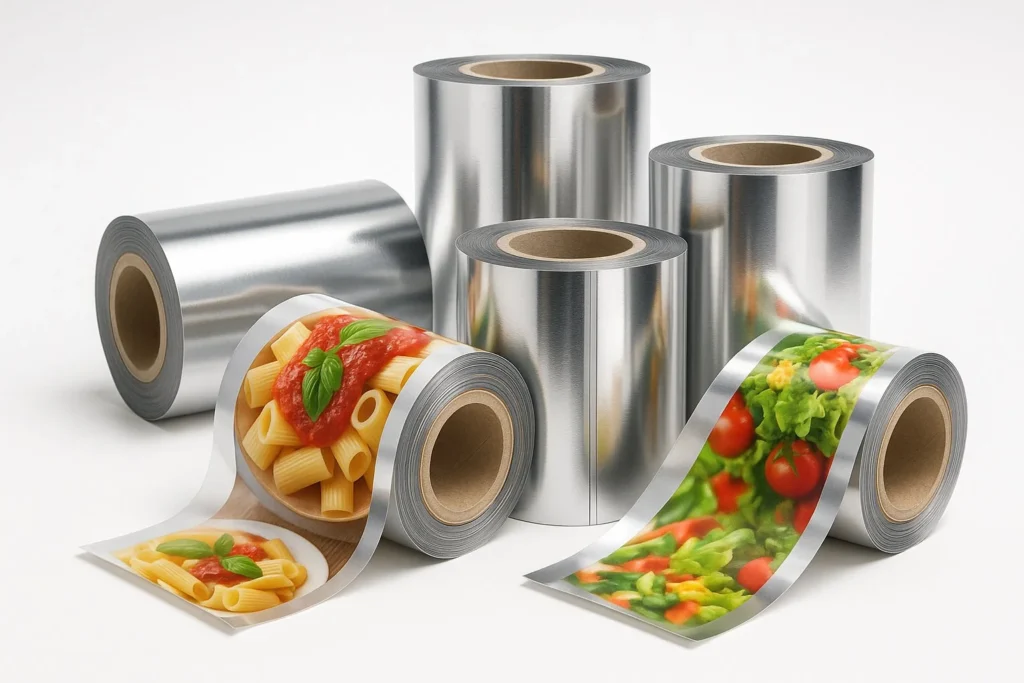
Laminated films are the basis of modern packaging, providing maximum protection of products from external factors. Sun Flex produces multilayer laminated films with various structures for the food and pharmaceutical industries. Our films combine the advantages of different materials, creating optimal barrier properties for specific packaging tasks.
Thanks to 16 years of experience and our own production, we develop individual solutions for each client. Our laminated films meet international quality standards and ensure a long shelf life of products.
Advantages of SunFlex laminated films
Multilayer structure
The combination of different materials ensures optimal properties of each layer for maximum product protection from moisture, oxygen and light.
High barrier properties
Effective protection against the penetration of gases, moisture and aromas ensures a long shelf life of products without loss of quality.
Food safety
All materials are certified for contact with food products and meet EU and FDA requirements for safe packaging.
Mechanical strength
High resistance to punctures, tears and deformations ensures the reliability of the packaging during transportation and storage.
Versatility of application
A wide range of structures allows you to choose the optimal solution for different types of products and storage conditions.
Economic efficiency
Optimal price-quality ratio thanks to our own production and the ability to manufacture exactly according to the customer's technical requirements.
Laminated film structures and their applications
Each laminated film structure is designed for specific packaging tasks. The selection of the optimal combination of layers depends on the type of product, storage and transportation conditions.
PET/PE structure
Polyethylene terephthalate with polyethylene provides excellent mechanical properties and moderate barrier characteristics. Ideal for packaging dry foods, snacks and non-food products.
PA/PE structure
Polyamide with polyethylene provides high puncture resistance and excellent oxygen barrier properties. The optimal choice for meat products, cheeses and products requiring vacuum packaging.
PET/AL/PE structure
The aluminum layer provides maximum protection from light, moisture and gases. It is used for packaging coffee, tea, pharmaceuticals and products with a long shelf life.
Our food industry needs reliable packaging solutions that ensure product safety and quality.
Technical characteristics of laminated films
| Structure | O₂ barrier | H₂O Barrier | Strength | Application |
|---|---|---|---|---|
| PET/PE | Moderate | Good | High | Dry products |
| PA/PE | High | Moderate | Very high | Meat products |
| PET/AL/PE | Maximum | Maximum | High | Coffee, pharma |
| BOPP/PE | Low | Good | Moderate | Bakery |
Application areas of laminated films
Multilayer films have found wide application in various industries due to their versatility and reliability. Solutions for the pharmaceutical industry are especially important, where the requirements for packaging quality are the highest.
The choice of laminated film structure should be based on the specific requirements of the product. Our technical specialists will help you choose the optimal solution, taking into account all factors: from the type of product to storage and transportation conditions.
Stages of production of laminated films
1
Requirements analysis
Detailed study of product specifics and packaging conditions to determine the optimal film structure.
2
Preparation of materials
Quality control of incoming materials and their preparation for the lamination process according to technical requirements.
3
Lamination
Bonding of layers using adhesive compositions or extrusion coating with temperature and speed control.
4
Quality control
Checking barrier properties, layer bonding strength and compliance with technical specifications.
5
Winding and packaging
Winding the finished film into rolls with the required parameters and packaging for transportation.
For detailed information about technical requirements for layouts and specifications, visit the technical requirements section.
Frequently asked questions about laminated films
- What is the minimum batch for the production of laminated films?The minimum batch depends on the film structure and is from 500 kg. For standard structures, smaller batches can be produced by agreement.
- How long does it take to produce laminated films?The production time for standard structures is 7-10 working days. For complex multi-layer structures, it may take up to 14 days.
- Can laminated films be used for hot-filling?Yes, some structures can withstand temperatures up to 120°C. It is necessary to agree in advance on technical requirements for the selection of appropriate materials.
- What certificates do products for the food industry have?All materials are certified in accordance with the requirements of EU Regulation 10/2011 and FDA for contact with food products. We provide the relevant certificates of conformity.
- Can I print on laminated films?Yes, we do flexographic printing in up to 8 colors on laminated films. Printing can be applied to both the outer and inner layers, depending on the requirements.
- How to store laminated films before use?Films should be stored in a dry place at a temperature of 15-25°C, avoiding direct sunlight. Rolls should be stored in an upright position.
- Is it possible to manufacture individual structures?Yes, we develop individual structures according to the customer's technical requirements. The process includes testing and coordination of all parameters before serial production.
You can find additional information about our capabilities and other types of flexible packaging on the relevant pages of our website.
Do you need laminated films for your production?
Our technical specialists will help you choose the optimal film structure and calculate the production cost. Get professional advice and a commercial offer within 24 hours.